In short
- Tempered glass is heated and then cooled quickly to harden it; if it breaks, it crumbles into small, blunt pieces.
- Laminated glass has a flexible film called PVB between two layers of glass; even when the glass breaks, the pieces stay stuck to the film.
- Laminated tempered glass is preferred for large fixed panels and wherever breakage could be a hazard.
Tempered glass: strengthened by heat
Tempered glass is made by heating ordinary glass in a furnace to about 600–700 °C and then cooling it quickly with blown air. This puts the outer surfaces under compression and makes the glass about five times stronger than untreated glass. That is why tempered glass is also called safety glass.
Its real safety feature shows when it breaks: instead of long, knife-like shards, it crumbles into small, blunt pieces the size of dice. This greatly reduces the risk of serious injury.

Laminated glass: glass that stays in place
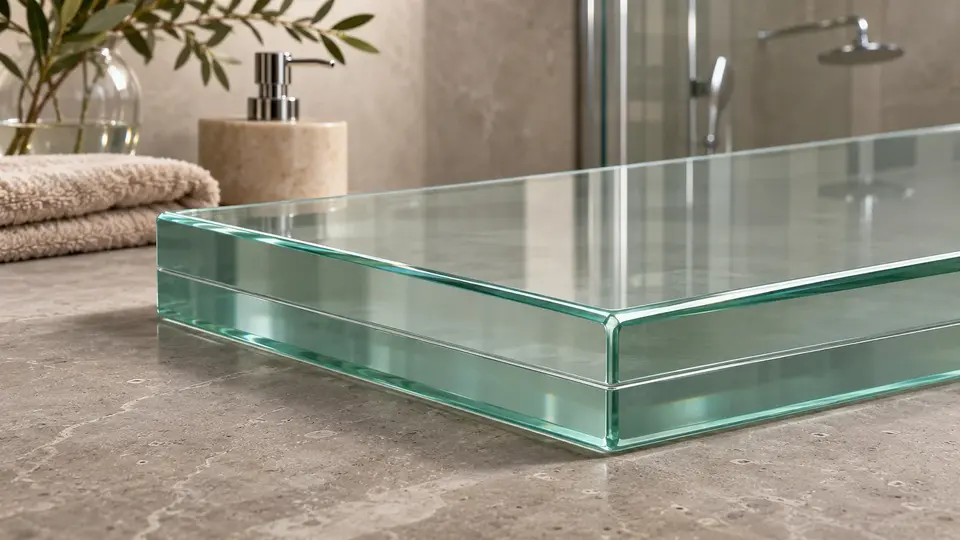
Laminated glass is made by placing a clear, flexible PVB (polyvinyl butyral) film between two layers of glass and bonding them with heat and pressure. Its thickness is usually written as 4+4 or 5+5 mm, meaning two 4 mm or two 5 mm panes joined into one panel.
PVB is tough, tear-resistant and flexible. Even if the glass breaks, the pieces stay stuck to the film, nothing falls to the floor, and the panel often stays in place. This is why car windscreens are made of laminated glass.
Laminated tempered glass: the best of both
The layers of laminated glass can themselves be tempered. One panel then combines the strength of tempered glass with laminated glass's ability to hold the pieces together. This is the preferred choice for large fixed panels and wherever breakage could be a hazard.
| Tempered glass | Laminated tempered glass | |
|---|---|---|
| How it is made | Heated, then cooled quickly | Two tempered panes with a PVB film between them |
| Strength | About 5× ordinary glass | As strong as tempered glass |
| When it breaks | Small, blunt pieces | Pieces stay stuck to the film |
| Typical use | Everyday shower enclosures | Large fixed panels, tall glass surfaces |
Which one for a shower enclosure?
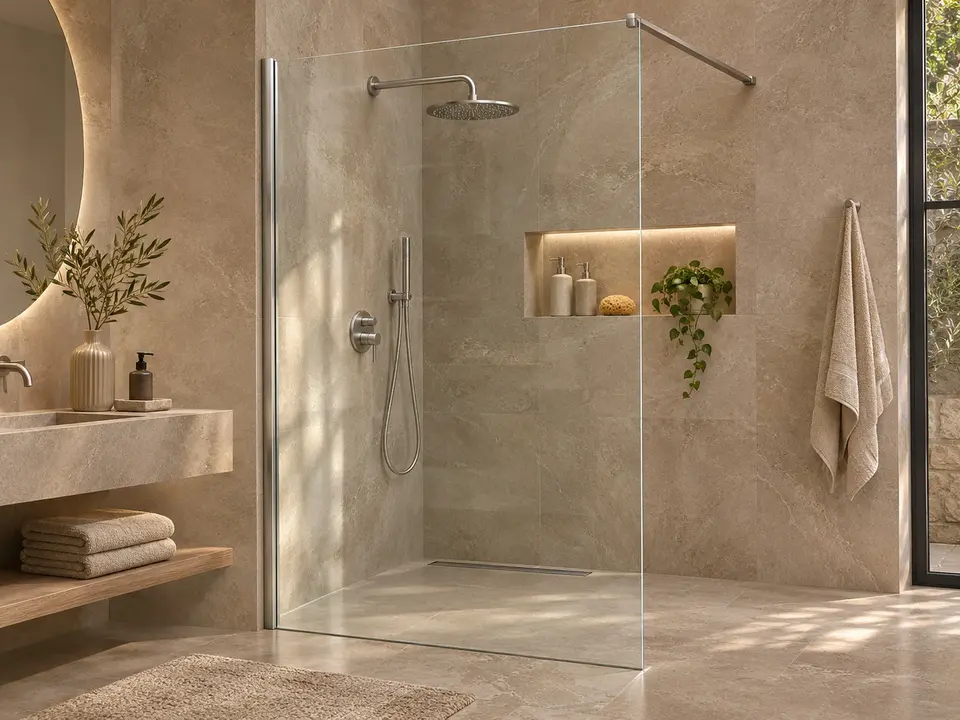
For most everyday shower enclosures, tempered glass is both sufficient and safe. For wide walk-in panels, floor-to-ceiling glass or bathrooms that children use a lot, laminated tempered glass adds extra peace of mind. You can ask our team which glass suits your bathroom when we come to measure.